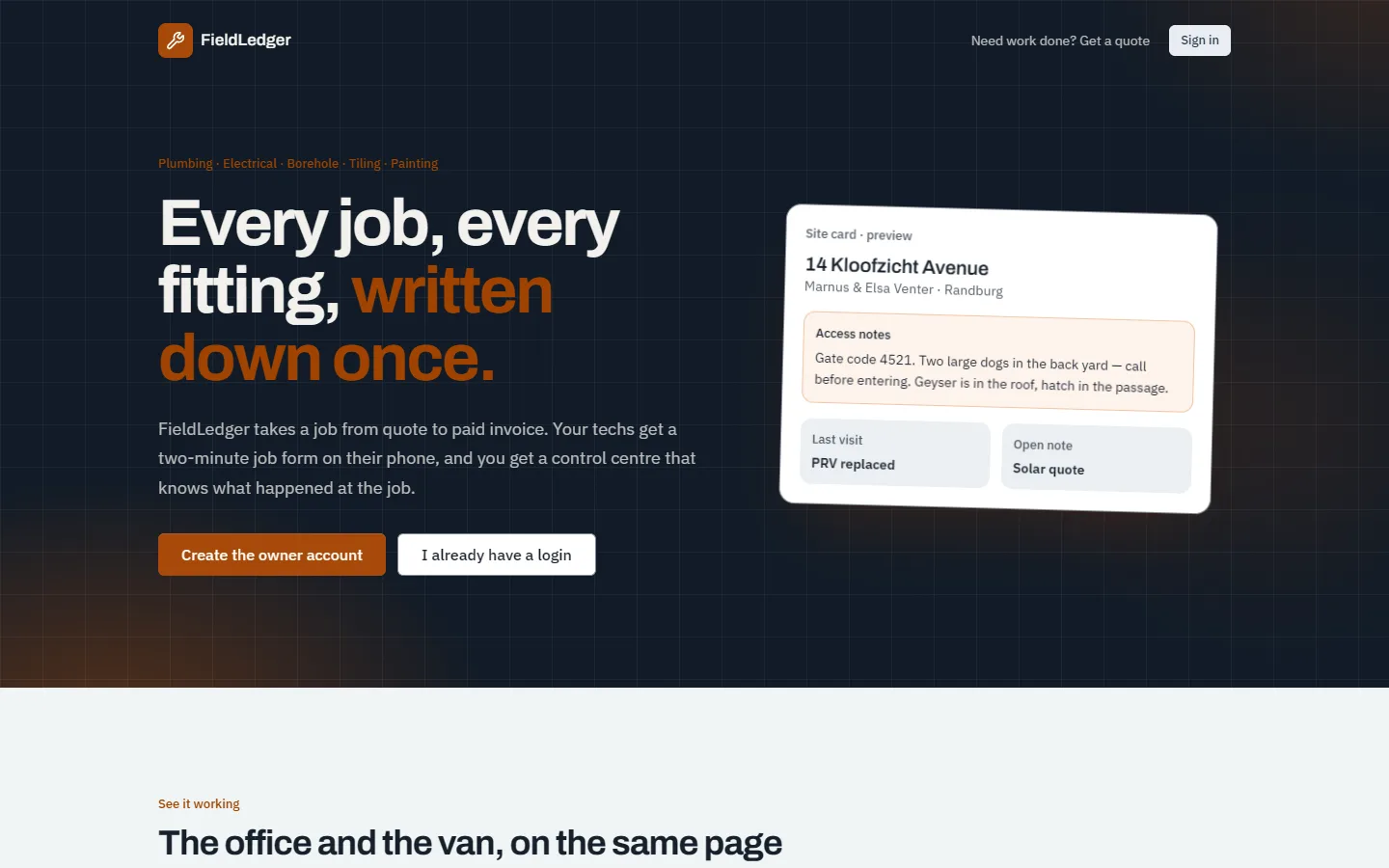
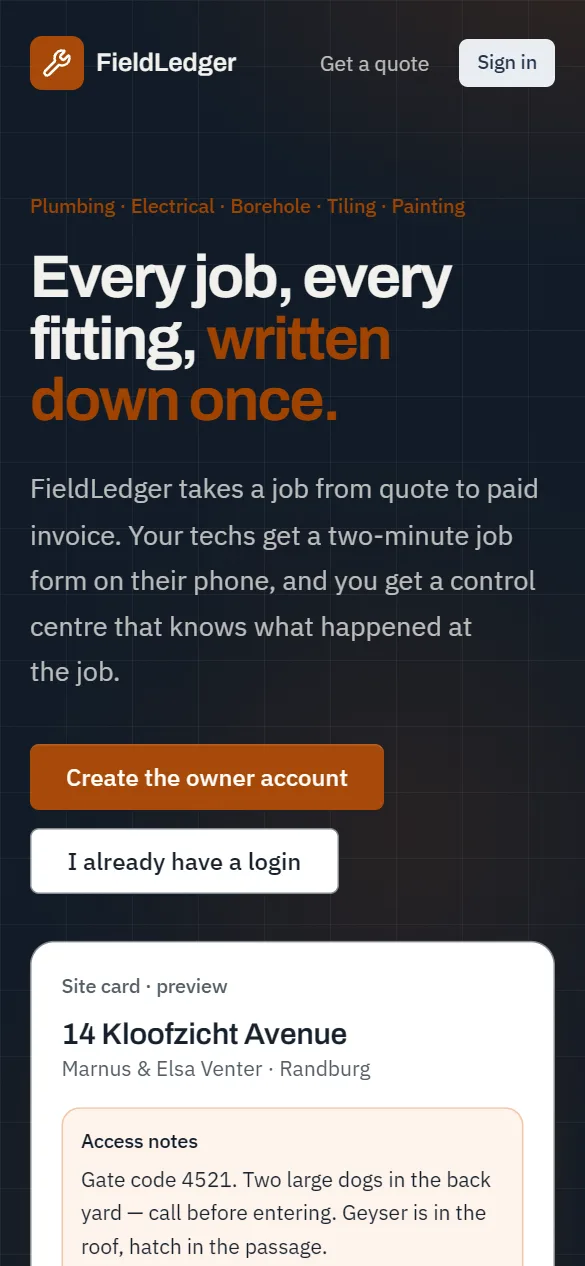
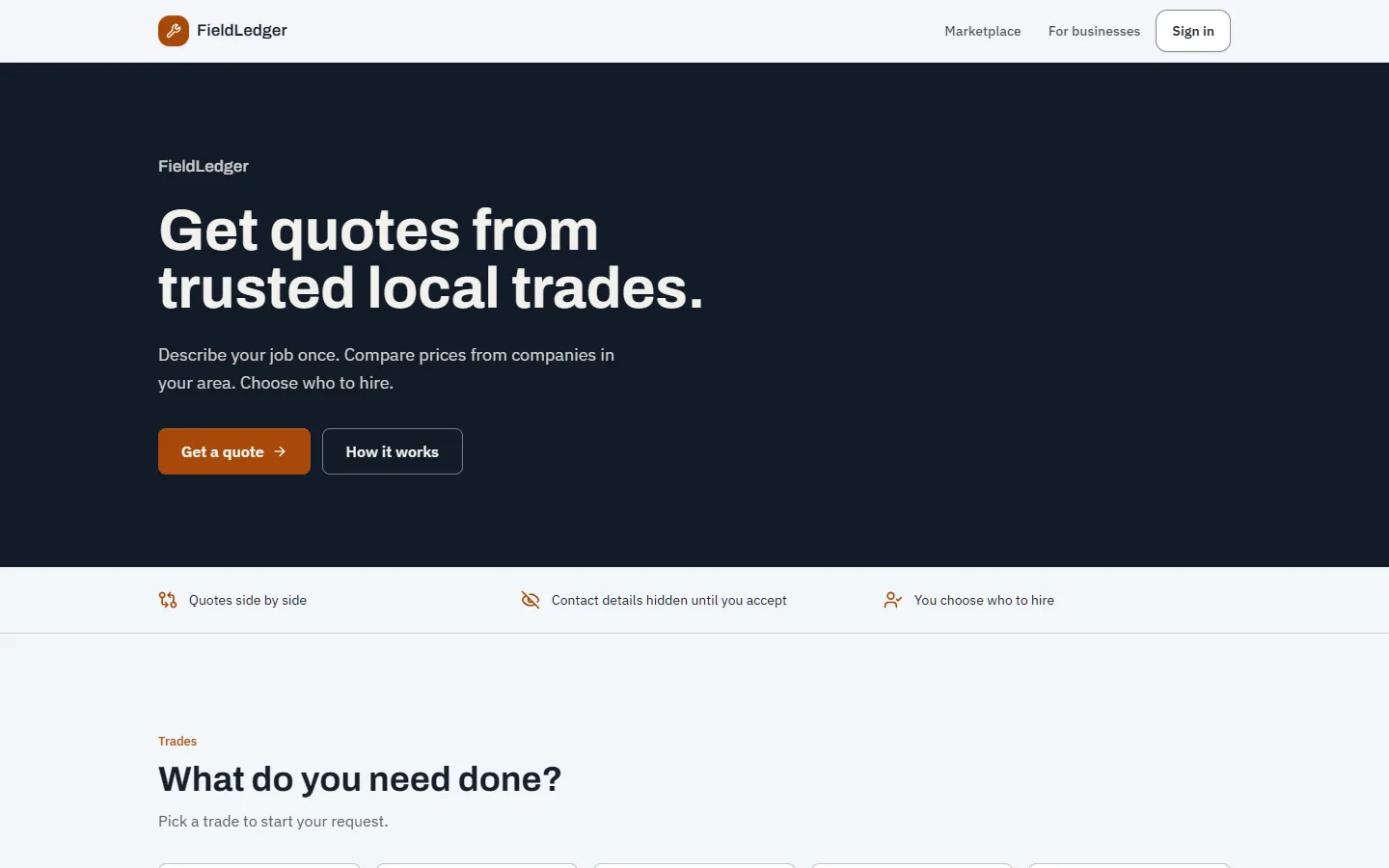
FieldLedger is a web app we designed and built for trades businesses such as plumbers, electricians, borehole, tiling and painting companies. It takes a job from quote to paid invoice, and it has a marketplace where homeowners describe a job once and compare quotes from local companies.
The problem
In a small trades business, the job lives in too many places: a WhatsApp chat, a paper quote, a note on the dashboard of the van and the owner's memory. Materials get used and nobody writes down where. By the time the invoice goes out, half of what happened on site is lost.
What we built
- One record per job. Quote, booking, site notes, photos, materials and invoice sit together, so the office knows what happened at the job.
- A short job form for the person on site. The tech fills it in on a phone in about two minutes.
- Materials and vans. Stock is logged against the job and the van it came from, with restock lists and equipment records.
- Quotes and invoices. Quote templates, invoicing and card payments, plus a calendar of the day's and week's jobs.
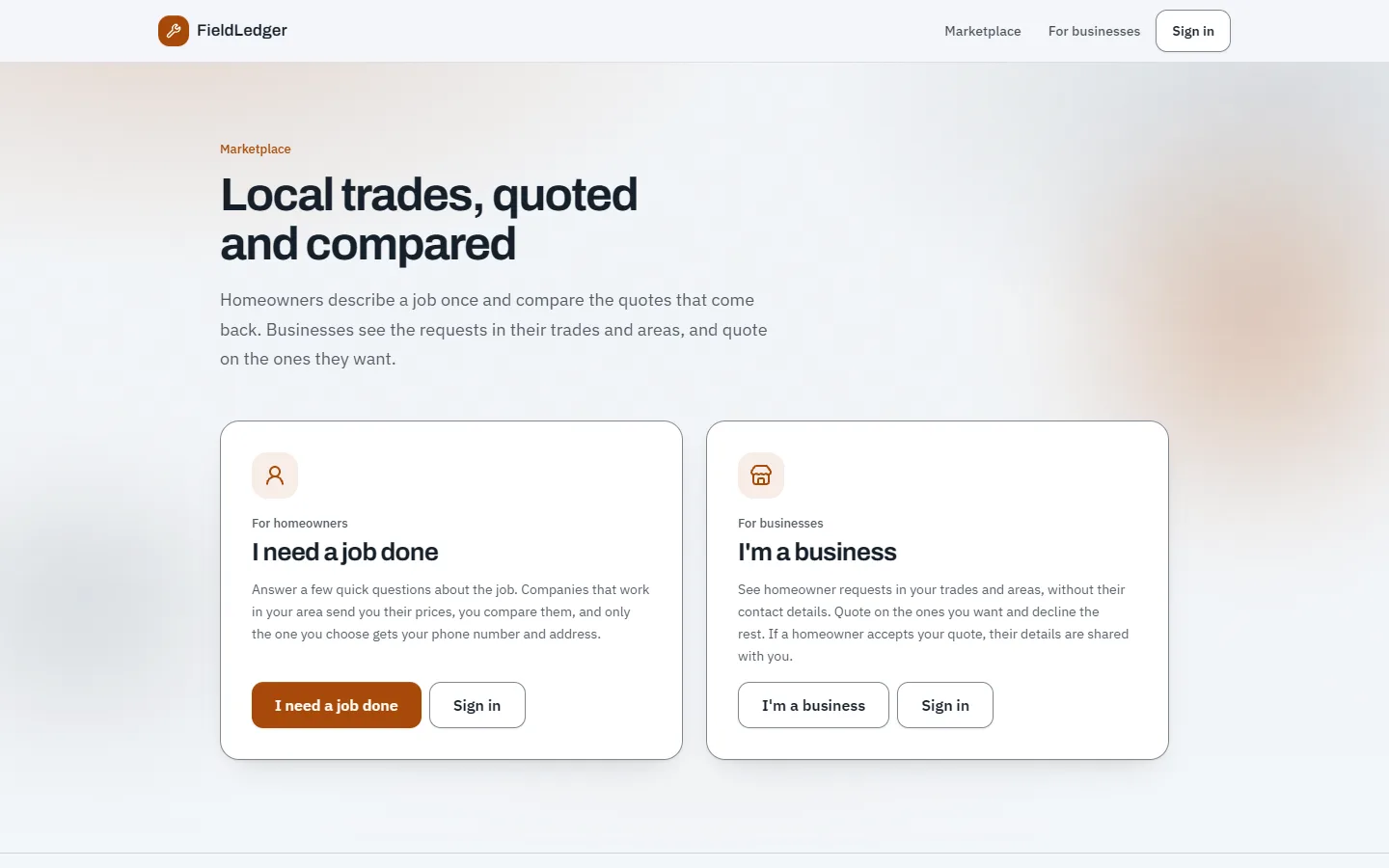
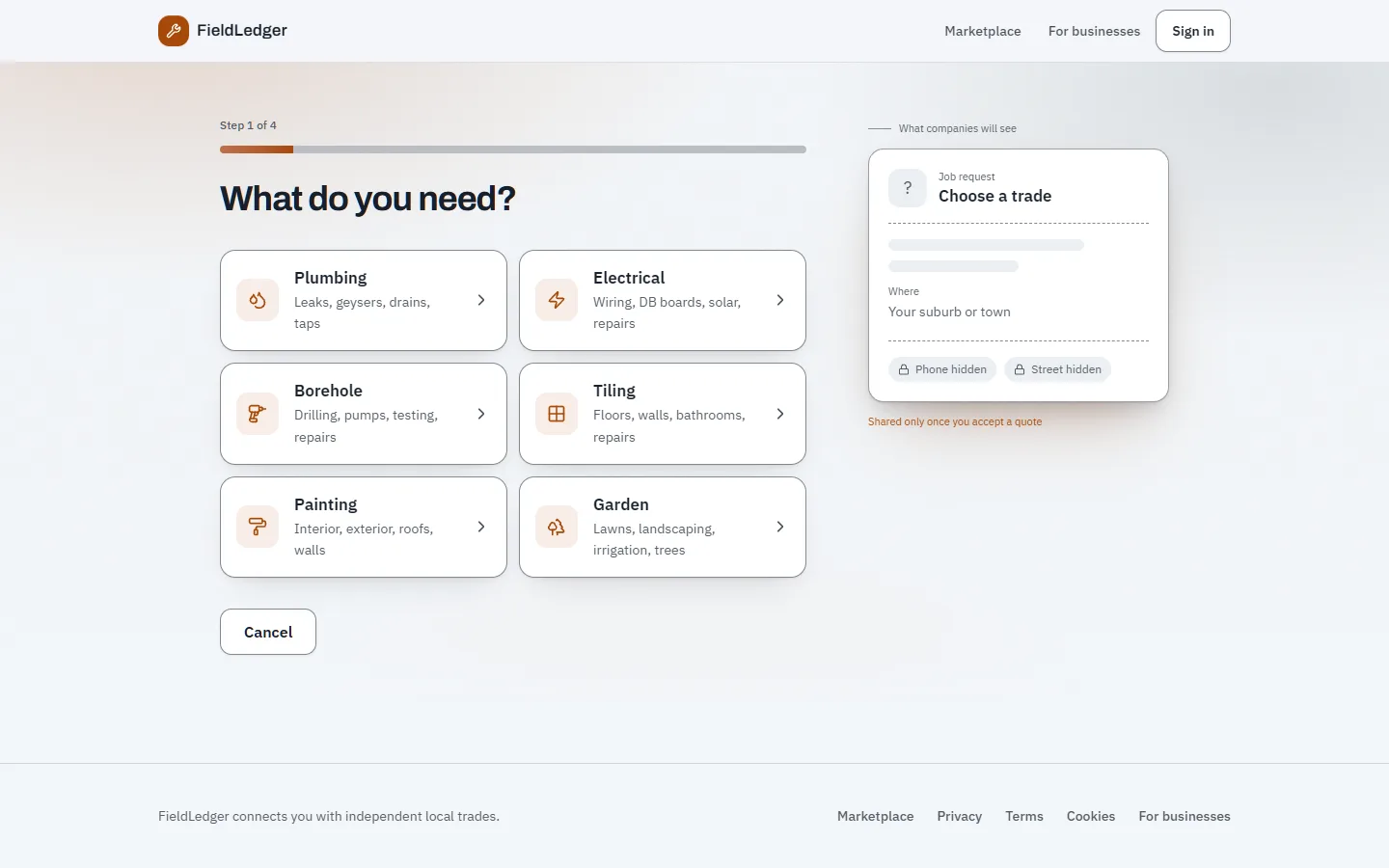
- A marketplace for homeowners. A homeowner answers a few questions about the job. Businesses in that trade and area see the request without the homeowner's contact details, and only the company whose quote is accepted gets the phone number and address.
Our app development service covers builds like this, and our forms and database service covers the records behind it.
Where it stands now
FieldLedger is live. The pictures on this page are its public pages only. The app behind the login holds real business records, so we do not show it here. We are not claiming usage figures yet. When we have them, we will add them to this page.
What this means for your business
If your jobs, stock and paperwork live in different places, start by writing down every step a job goes through, from the first call to the payment. That list is the outline of the app you need, whether you buy one or have one built.
If you want one built around how you work, book a call. We will look at your process and tell you what the app needs and what it will cost.
More from the site
Common questions
What should a job management app for a trades business do?
At the least it should take a job from quote to invoice in one place: the quote, the booking, notes and photos from site, the materials used and the invoice. The person on site should be able to fill it in on a phone in a couple of minutes, and the office should see it straight away.
Why track materials per van?
Stock disappears quietly when nobody records what was used on which job. Logging materials against the job and the van shows what each job really cost, what needs restocking and where items went.
How do quote marketplaces protect a homeowner's details?
A good one shows businesses the job and the area but hides the homeowner's phone number and street address. Those details are shared only with the company whose quote the homeowner accepts, so the homeowner does not get calls from everyone who saw the request.
Sources
Third-party features change. Check each provider's own site for current details and fees.