On this page
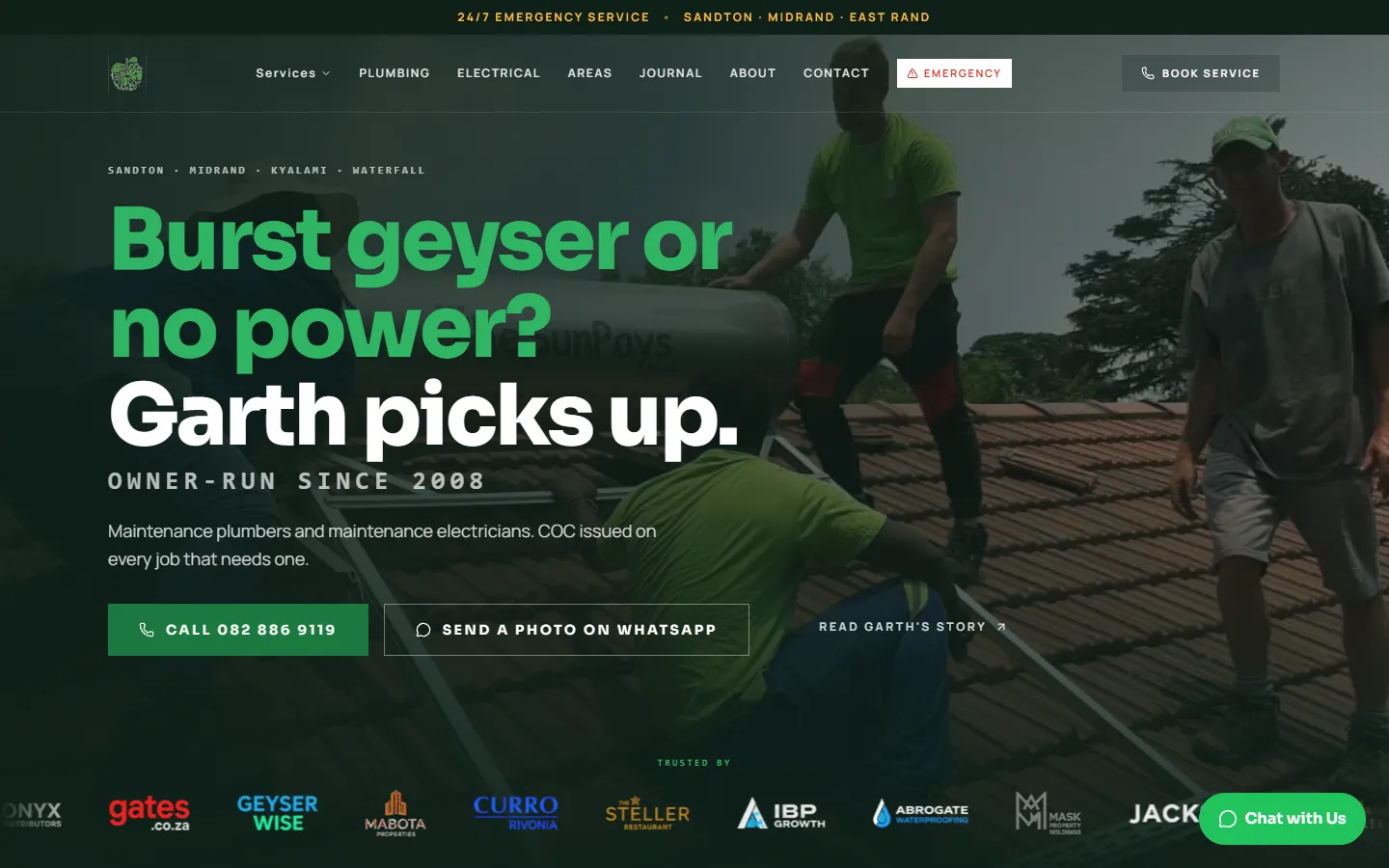
Apple Plumbing & Electrical is an owner-managed plumbing and electrical firm serving Sandton, Midrand and northern Johannesburg since 2008. In 2026 we found a mismatch between its Google profile and website, and delivered the fix: one consistent base, service-area settings, structured data and a new profile description. We are now tracking indexing and profile calls, and we claim no results yet.
The business
Apple Plumbing & Electrical has been trading since 2008. It is run by its owner and covers Sandton, Midrand and northern Johannesburg. The plumbers are PIRB-registered, and the electrical work is led by a Master Installation Electrician.
The work is the everyday work a household or a small business needs: geysers, leak detection, inverters and compliance certificates (COCs). These are the jobs people search for in a hurry, often from a phone, often with water on the floor or the power off.
The problem: one business that looked like two
When we checked the setup, the name and the area did not match. The Google Business Profile gave Kyalami as the base. The website said Sandton. To a person, that is a small detail. To Google, two different bases next to the same name can read like two different businesses.
That matters because local search leans on consistency. Google compares what your profile says with what your website says and with what other sites say. When they disagree, the business is harder to place and harder to trust. For a trade business that wins work by being found nearby, that is a real cost.
What we did
We delivered the fix as a ready-to-apply package, in four parts.
- One name and one base. The profile, the website footer and the schema all use the same name, base and service areas, so they tell the same story.
- Switched to service-area-business mode. Plumbers and electricians go to the customer, so the profile and the schema no longer show a street address. Instead, areaServed lists about 15 real areas, such as Sandton, Midrand, Kyalami, Bryanston, Fourways, Rivonia and Sunninghill.
- Wrote LocalBusiness structured data. The JSON-LD is typed as both Plumber and Electrician. It lists the services, the opening hours and the founder, so search engines and AI tools can read the facts directly instead of guessing.
- Wrote the Google profile description. It says plainly what the business does, where, and what qualifications back it up.
If you want to see how the profile side works, our Google Business Profile guide covers it step by step. The services behind this work are SEO and AEO and Google Business Profile.
What we learnt from Search Console
In June 2026, Search Console showed a large group of thin, auto-generated suburb pages: one page per suburb per service. They were sitting under "Discovered, currently not indexed". Between 12 and 13 June 2026 that count dropped from 125 to 57.
This is a common lesson, and a fair one to learn from. Many businesses, and many tools, generate a page for every suburb and service because it looks like more coverage. Google often declines to index pages that are near-duplicates of each other, because they add little that is new for a searcher.
- Fewer area pages, each one useful. A page earns its place when it says something specific about that area.
- Stronger service pages. Geysers, leak detection, inverters and COCs each deserve a page that answers the real questions people ask.
- Clear, consistent facts. Name, services, areas and hours should read the same everywhere.
The fix direction is to move away from volume and towards pages that deserve to be indexed. We have not claimed that the drop from 125 to 57 is a result of our work. It is a snapshot we are watching.
Where it stands now
The groundwork is delivered: one consistent name and base, service-area settings, the structured data and the profile description. We do not claim any before-and-after ranking or call numbers, because we do not have them yet.
What we are tracking next is specific. In Search Console we watch how many pages are indexed and how many are still in "Discovered, currently not indexed". In the Google profile we watch calls. When there is a real change to report, we will report it.
What this means for your business
If you serve customers at their homes or premises, check three things this week. Does your Google profile give the same base as your website? Do you show a street address you would rather hide? Do you have a page for every suburb that says the same thing with a different name?
If any answer is yes, there is probably an easy fix. Start with the SEO and AEO service, or book a call and we will look at your profile and Search Console with you.
Common questions
Why does Google need my business address to match on my website and Google profile?
Google compares your website with your Google Business Profile to decide whether they describe one business. If the profile says one base and the website says another, the signals conflict and can read like two separate businesses. Matching the name, area and details everywhere makes your local listing easier to trust and easier to rank.
What is a service-area business on Google?
A service-area business travels to customers instead of serving them at a shop. On Google Business Profile you can hide your street address and list the areas you cover. Plumbers, electricians and cleaners are typical examples. The website should then describe the same areas, so both sources tell Google the same story.
What does Discovered, currently not indexed mean in Search Console?
It means Google found the page address but has not added the page to its index. This often happens with many near-identical pages, such as one page per suburb with the same text. Google is saying those pages add little new value. Fewer, more useful pages usually serve you better.
Should a plumber have a separate page for every suburb?
Not unless each page offers something genuinely different, such as real local detail, real jobs or real questions customers ask there. Near-duplicate suburb pages tend to be left out of Google's index. A smaller set of useful area pages, backed by strong service pages, is a safer approach.